GASOLINE TWILIGHT: ALL THE MAD MAXES
Do not, my friends, become addicted to water. It will take hold of you, and you will resent its absence.
Films in this Program
George Miller
93 minutes
A few years from now...
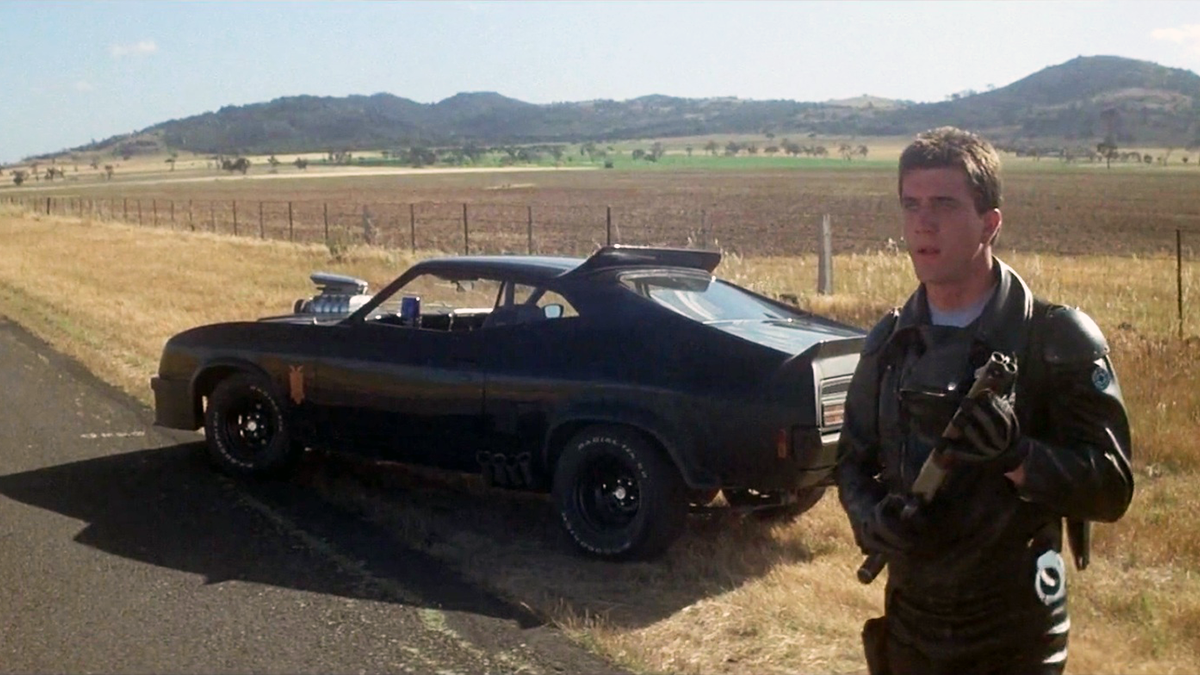
Roving motorcycle gangs terrorize rural Australia, and only one thing stands in between total anarchy and peace in this nearby dystopia: leather daddies! Before he became a road warrior, went beyond Thunderdome, or rolled down Fury Road, Max wasn't even all that mad. He was on the Main Force Patrol, the aforementioned leather clad law enforcers who patrol the roadways in souped up muscle cars. Enter the Toecutter (Hugh Keays-Byrne who went on to play Immortan Joe in FURY ROAD), leader of a vaguely homoerotic gang who declares war on the MFP after they kill The Nightrider (remember him when you look at the night sky). Fuel injected action rules as George Miller kicks off this immortal series with a humble cop vs. biker gang story that still manages to thrill and shock with breathtaking stunts and gut-wrenching violence. Find out what made Max so dang mad!
Roving motorcycle gangs terrorize rural Australia, and only one thing stands in between total anarchy and peace in this nearby dystopia: leather daddies! Before he became a road warrior, went beyond Thunderdome, or rolled down Fury Road, Max wasn't even all that mad. He was on the Main Force Patrol, the aforementioned leather clad law enforcers who patrol the roadways in souped up muscle cars. Enter the Toecutter (Hugh Keays-Byrne who went on to play Immortan Joe in FURY ROAD), leader of a vaguely homoerotic gang who declares war on the MFP after they kill The Nightrider (remember him when you look at the night sky). Fuel injected action rules as George Miller kicks off this immortal series with a humble cop vs. biker gang story that still manages to thrill and shock with breathtaking stunts and gut-wrenching violence. Find out what made Max so dang mad!
George Miller
96 minutes
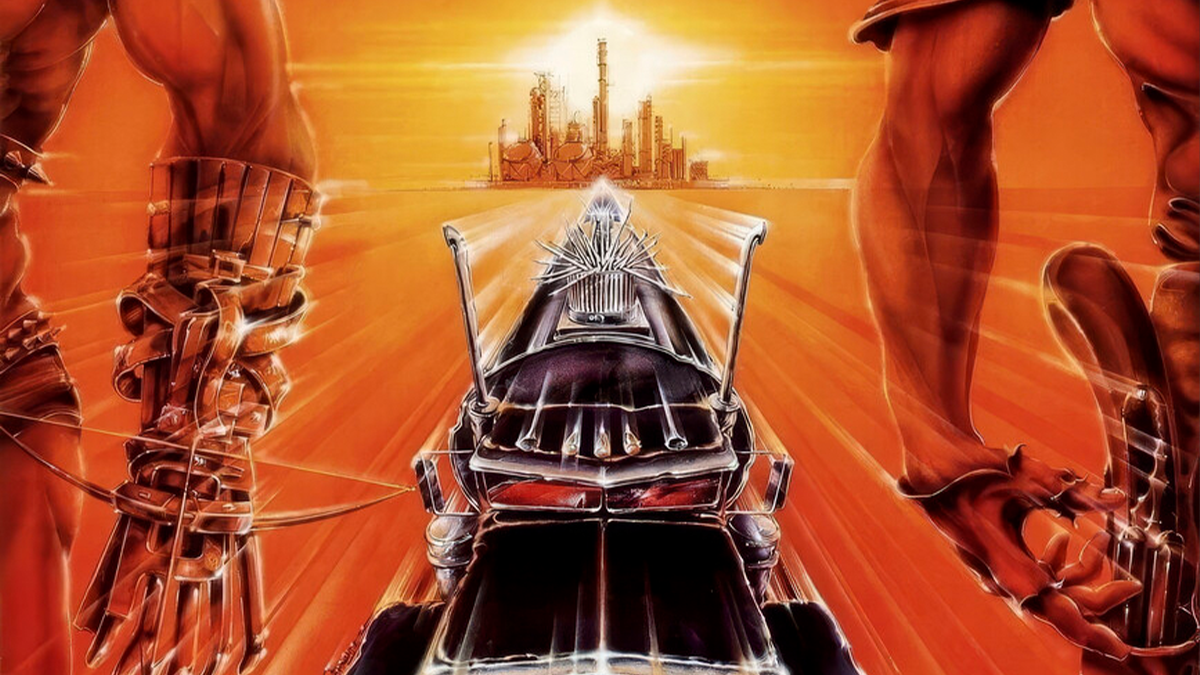
THE BEST ACTION MOVIE OF ALL TIME!! Before Mel Gibson traded in his post-apocalyptic leatherwear for the flowing cotton robes of Jesus (among other things), he was The Toughest Hero in Movie History. Mad Max burned rubber across the scorched highways of the barren Earth, on the hunt for fuel and the blood of criminal marauders. Even in the Australian desert, some shotgun-wielding punk goon needs to be murdered every 30 seconds or so. Easy work for Max, until he runs up against post-nuke hellmaster Lord Humungus and his crew of feral mohawked wasteoids. Suddenly, the lone wolf of the wasteland finds himself defending the last outpost of untarnished humanity. What follows is inarguably the single greatest chase/fight/stunt explosion ever captured on film, with more car-flipping and stuntman-smashing than any 1000 American action blockbusters could dream of. Come witness the absolute ultimate in fallen world annihilation with THE ROAD WARRIOR!
George Miller
107 minutes
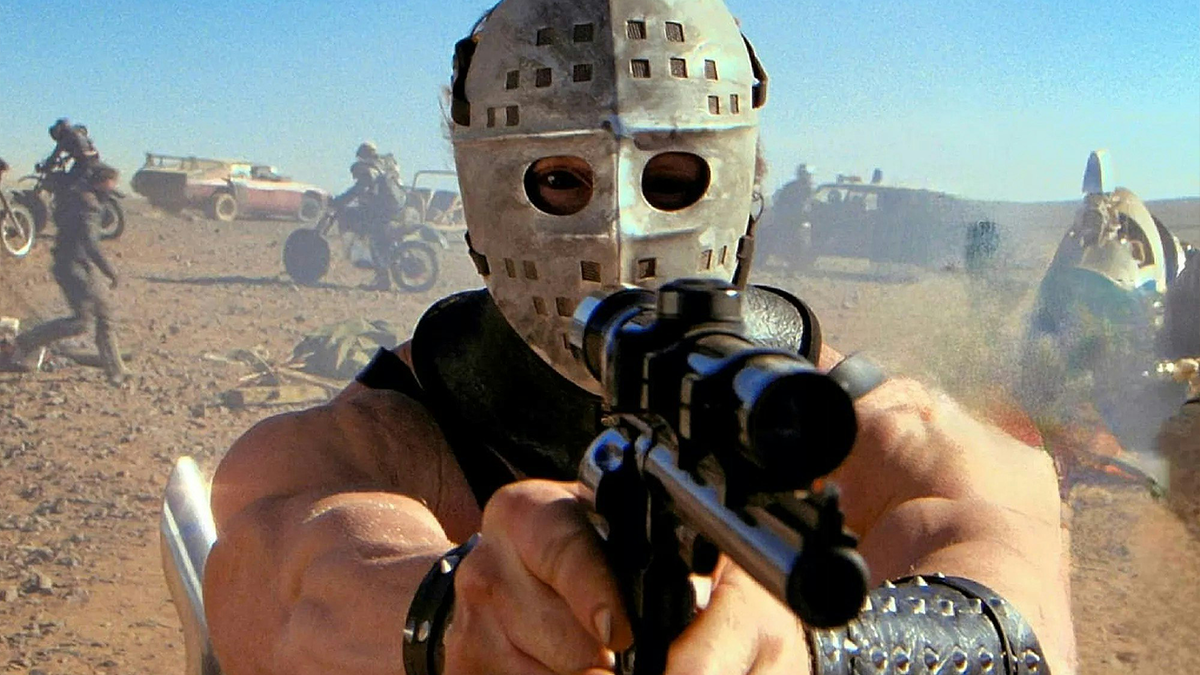
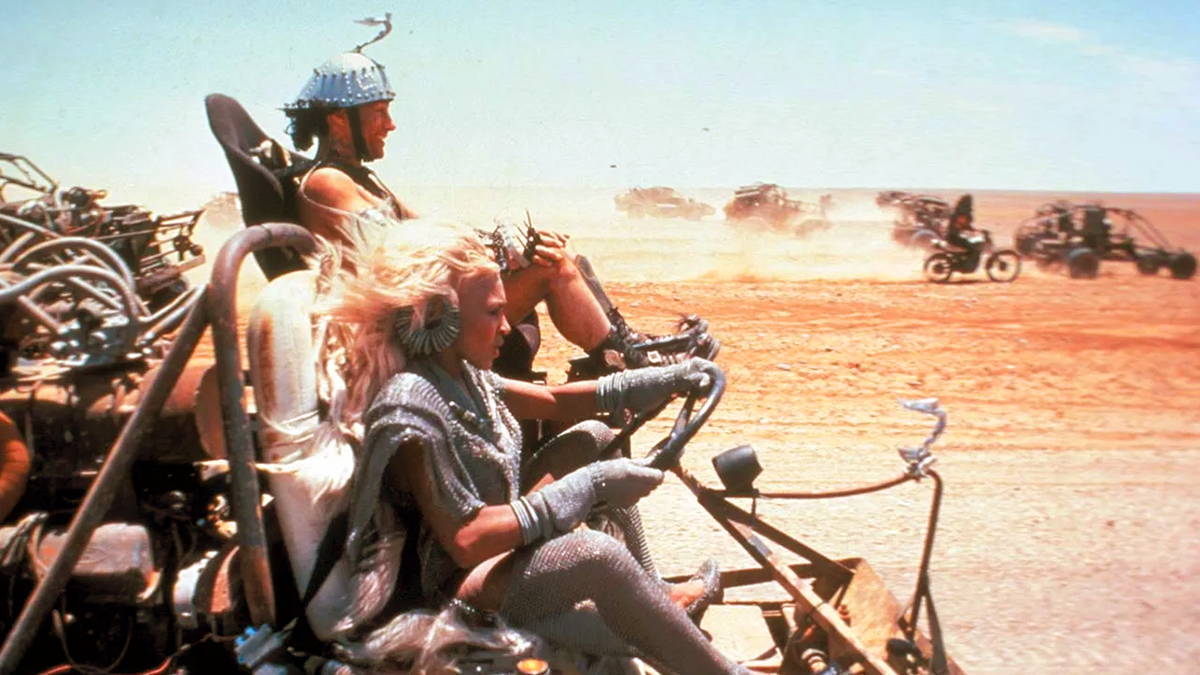
Bartertown may be a dump in the post-apocalyptic Australian outback, but it's the only dump people can go to trade for food, water, weapons and supplies. When Max finds himself looted, he must go to Bartertown to resupply. But Max being Max, he gets caught in a power struggle that finds him forced into the Thunderdome to battle Master Blaster, a miniature man who controls a masked monster warrior. This fight leaves Max banished into the desert wasteland, where he is rescued by a tribe of children who think he is their salvation. When some of the children wonder off in search of the famed Tomorrow Morrow Land it's up to Max to travel the cursed Earth and save them from the evil Aunt Entity (Tina FUCKING Turner).
The Mad Max Wasteland gets a spoonful of Spielberg in BEYOND THUNDERDOME and it’s way better than its reputation would suggest. The violence and action is even more Looney Tuney than before, but this is a difference of degree rather than type, and if your soul is too tired to enjoy somebody getting clonked with a nice frying pan clang sound effect you might as well just stop watching movies and stick to AM radio instead.
The Mad Max Wasteland gets a spoonful of Spielberg in BEYOND THUNDERDOME and it’s way better than its reputation would suggest. The violence and action is even more Looney Tuney than before, but this is a difference of degree rather than type, and if your soul is too tired to enjoy somebody getting clonked with a nice frying pan clang sound effect you might as well just stop watching movies and stick to AM radio instead.
George Miller
148 minutes
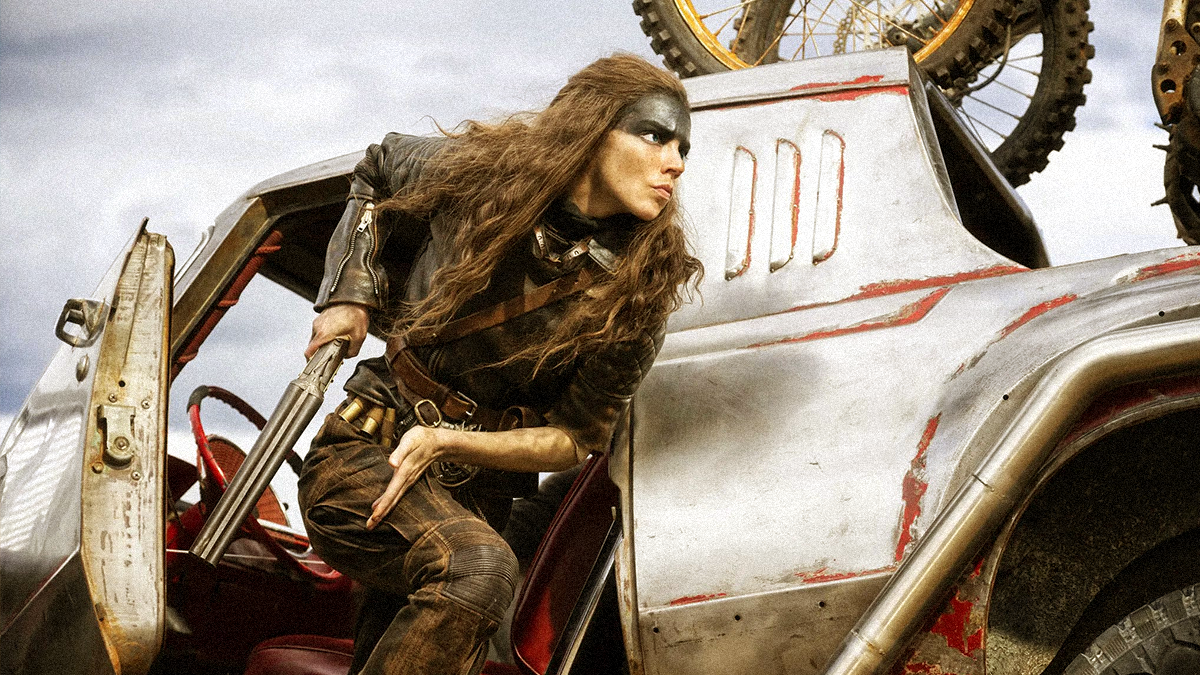
Long before Max Rockatansky fought, crashed, and exploded his way across the Fury Road, a young girl was stolen from her home and thrown into a world of fire and blood. Her name – FURIOSA! Welcome back to George Miller’s increasingly strange odyssey of pillagers, savages, and the hesitant heroes at the end of the world.
This movie’s box office failure is a textbook example of ‘The World Was Wrong.’ But FURIOSA doesn’t really behave like the other Mad Max movies, because it isn’t primarily driven by an unrelenting forward momentum of action set-pieces. There are certainly incredibly expressive, nearly avant-garde moments of kineticism to be found here, but FURIOSA is a largely wordless picture, overwhelmed with Eisenstein-ian montage between characters and places spread about the awful wasteland. It's one of the most idiosyncratic prequels ever made.
“Miller’s consciousness behaves like Nostradamus, who has seen his visions of the end, and must now warn us that the future will not be epic, but besotted with disease, decay, and desolation. It’s not that FURIOSA isn’t an exhilarating film, but that the baggage of the apocalypse is inherent in what feels like every frame. And god, these frames are beautiful. Miller has always been a painter, but here he has become a silent film technician. He has sculpted a fantasia in his nocturnal sequences featuring floating heads of the new world monsters engorged in a starless sky. At day, he has placed his camera on the ground and filmed the sky like an ocean spilling atop his characters, but all that’s here is the hateful sun, and there’s nowhere to hide from its blistering rays. In the nooks and crannies of the underground, his camera tracks inside untold labyrinths of mole women running experiments on larvae in wounded flesh. Is this our world? Miller seems to believe that when everything falls we will still be a people of tribes and borders held together with thin lines of bureaucracy, and plenty will be left to die. Men will transform into bikers. Women into witches. A new binary for the last age.” - Willow Maclay
This movie’s box office failure is a textbook example of ‘The World Was Wrong.’ But FURIOSA doesn’t really behave like the other Mad Max movies, because it isn’t primarily driven by an unrelenting forward momentum of action set-pieces. There are certainly incredibly expressive, nearly avant-garde moments of kineticism to be found here, but FURIOSA is a largely wordless picture, overwhelmed with Eisenstein-ian montage between characters and places spread about the awful wasteland. It's one of the most idiosyncratic prequels ever made.
“Miller’s consciousness behaves like Nostradamus, who has seen his visions of the end, and must now warn us that the future will not be epic, but besotted with disease, decay, and desolation. It’s not that FURIOSA isn’t an exhilarating film, but that the baggage of the apocalypse is inherent in what feels like every frame. And god, these frames are beautiful. Miller has always been a painter, but here he has become a silent film technician. He has sculpted a fantasia in his nocturnal sequences featuring floating heads of the new world monsters engorged in a starless sky. At day, he has placed his camera on the ground and filmed the sky like an ocean spilling atop his characters, but all that’s here is the hateful sun, and there’s nowhere to hide from its blistering rays. In the nooks and crannies of the underground, his camera tracks inside untold labyrinths of mole women running experiments on larvae in wounded flesh. Is this our world? Miller seems to believe that when everything falls we will still be a people of tribes and borders held together with thin lines of bureaucracy, and plenty will be left to die. Men will transform into bikers. Women into witches. A new binary for the last age.” - Willow Maclay
George Miller
120 minutes
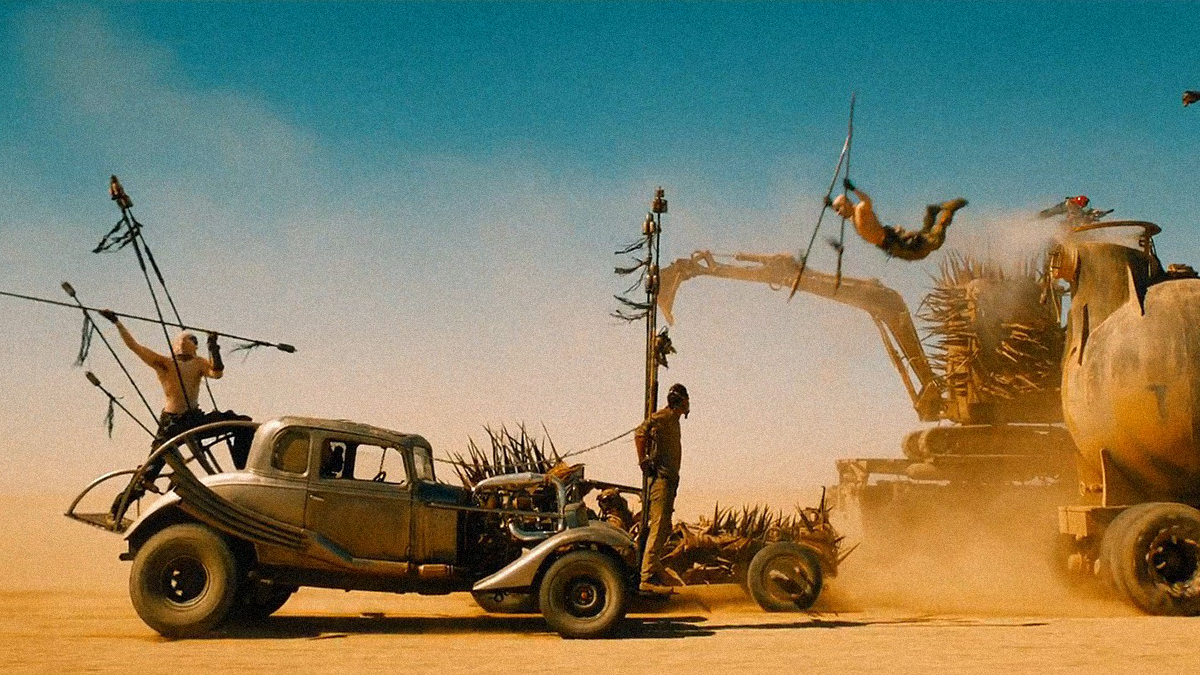
Haunted by his turbulent past, Max Rockatansky believes the best way to survive is to wander alone. Nevertheless, he becomes swept up with a group of women prisoners fleeing across the Wasteland in a War Rig driven by an elite imperator, Furiosa. They are escaping a Citadel tyrannized by the Immortan Joe, from whom something irreplaceable has been taken. Enraged, the Warlord marshals all his gangs and pursues the rebels ruthlessly in the high-octane road war that follows.
FURY ROAD never stops moving, both in its plot and politics. Its obsession with movement, both literally and metaphorically, allows the film to become one of the greatest action pictures in recent memory while possessing a radical edge few Hollywood films ever have. It depicts a despairingly plausible nightmare future, but FURY ROAD suggests that if we keep moving, there may still be room for hope beyond the fire and dust.
“It’s hard to do justice in words to FURY ROAD‘s nonstop, breathtaking action sequences. Miller and team are on record as saying the stunts, for the most part, are real. But there’s still an otherworldliness to these setpieces — colorful flares pop across the skies, the weaponry is ludicrous (one guy’s got a flamethrowing guitar), the explosions are so bright as to seem downright cartoonish. This is not the dusty, grotty world of The Road Warrior, where we could almost taste the dirt. Here, we watch the movie in a weird state of vicarious pain, delirium and ecstasy; it actually takes something out of us. FURY ROAD may be a sequel, a reboot or whatever, but it’s so perverse, florid, mannered and dense that it feels like a wild-eyed castaway in the wasteland of Hollywood blockbusters. It’s a work of almost religious horror and beauty — the Sistine Chapel of action filmmaking.” – Bilge Ebiri, Village Voice
FURY ROAD never stops moving, both in its plot and politics. Its obsession with movement, both literally and metaphorically, allows the film to become one of the greatest action pictures in recent memory while possessing a radical edge few Hollywood films ever have. It depicts a despairingly plausible nightmare future, but FURY ROAD suggests that if we keep moving, there may still be room for hope beyond the fire and dust.
“It’s hard to do justice in words to FURY ROAD‘s nonstop, breathtaking action sequences. Miller and team are on record as saying the stunts, for the most part, are real. But there’s still an otherworldliness to these setpieces — colorful flares pop across the skies, the weaponry is ludicrous (one guy’s got a flamethrowing guitar), the explosions are so bright as to seem downright cartoonish. This is not the dusty, grotty world of The Road Warrior, where we could almost taste the dirt. Here, we watch the movie in a weird state of vicarious pain, delirium and ecstasy; it actually takes something out of us. FURY ROAD may be a sequel, a reboot or whatever, but it’s so perverse, florid, mannered and dense that it feels like a wild-eyed castaway in the wasteland of Hollywood blockbusters. It’s a work of almost religious horror and beauty — the Sistine Chapel of action filmmaking.” – Bilge Ebiri, Village Voice